
What's available depends on the type and age of the debt, whether your returns are filed, your income and expenses, your asset equity, and whether the IRS has started enforcement. Ignoring a notice is the worst move. As JFT Group puts it, the IRS carries out its threats.
This guide walks through the process: confirm the balance, get compliant, pick an option, prepare records, submit, follow up, and avoid common mistakes.
Key Takeaways
- Options include payment plans, Offers in Compromise, penalty relief, Currently Not Collectible status, and appeals.
- Unfiled returns and missed current-year payments usually block relief.
- Accurate records that match your forms make the strongest request.
- Business debt, levies, disputed assessments, or messy books justify professional help.
How to Negotiate With the IRS
Step 1: Confirm the debt, tax periods, and deadlines
Start with the notice, your IRS Online Account, and account transcripts. Business filers may need Form 4506-T for transcripts.
Check three things:
- Whether the balance is assessed tax, penalties, interest, or a proposed audit amount
- Which tax years or periods are covered
- Which response, appeal, levy, or payment deadline is closest
Notices typically escalate from CP14 through CP501, CP503, and CP504. A final notice of intent to levy (LT11 or Letter 1058) gives you 30 days to request a Collection Due Process hearing on Form 12153.
If the amount looks wrong, you don't need a collection negotiation. You need a dispute: audit reconsideration, an amended return, or an appeal. JFT Group advises writing a polite letter explaining any error or omission in the IRS's calculations.
Step 2: Bring filings and current obligations up to date
File missing returns first. If you don't file, the IRS may prepare a substitute return that omits standard deductions and inflates the liability.
Before you apply, meet the filing and payment rules for your path:
- Offer in Compromise: all required returns filed and current estimated payments made
- Employers: federal tax deposits for the current and prior two quarters
- Installment applicants: current with filing and payment
Business owners should reconcile books, payroll records, sales records, and bank activity before completing any financial disclosure.
Everything you submit must be complete and truthful. Never hide assets or inflate expenses.
Step 3: Match your situation to the right resolution
Each option fits a different problem.
| Option | Best fit | Key details |
|---|---|---|
| Payment plan | You can pay over time | Short-term plan up to 180 days; online long-term plans generally for $50,000 or less owed; setup fees vary |
| Offer in Compromise | You can't pay in full | Form 656; $205 fee unless low-income; strict criteria |
| Penalty relief | Debt is mostly penalties | First-time abatement or reasonable cause; Form 843 where applicable |
| Currently Not Collectible | You can't pay now | Collection delayed; interest and penalties keep accruing |
| Appeal or reconsideration | Balance is wrong | CDP, CAP, or audit reconsideration |
An Offer in Compromise isn't automatically the best choice. The IRS generally won't accept one if it believes you can pay in full through a lump sum or payment plan.
It also requires extensive disclosure (Form 433-A (OIC) or 433-B (OIC)), upfront payments, and five years of ongoing compliance after acceptance.
Use the free IRS Pre-Qualifier for a preliminary estimate. It isn't an acceptance decision.

A quick framework:
- Can pay in full over time: a payment plan
- Can't pay and have little equity: an Offer or CNC status
- Mostly penalties, clean history: penalty relief
- Disagree with the amount: dispute or appeal
Step 4: Submit, communicate, and follow up
Send the right forms and supporting records through the IRS-approved channel. Keep copies and log every deadline and conversation.
When you speak with the IRS, stay calm and organized. Answer directly, ask for clarification, and skip emotional arguments.
If the IRS asks for more information, respond before the stated deadline. If it returns an incomplete application or continues collection, read the letter closely for the reason and next step. Appeal deadlines are on the notice, so follow them exactly.
When to Negotiate and What to Prepare
Early action is usually better, but strategy depends on whether you can pay, dispute the balance, face hardship, or already face enforcement.
When negotiation makes sense
- A valid balance you can't pay in full
- Monthly payments that are unaffordable
- Heavy penalties
- Temporary hardship or business cash-flow disruption
- A pending levy or garnishment
Individuals, self-employed taxpayers, and businesses face different rules. Employers with unpaid payroll taxes risk the Trust Fund Recovery Penalty, so don't treat those like ordinary income-tax debt. If you can pay but think the assessment is wrong, pursue the dispute route rather than offering a payment amount.
Situations needing urgent attention
- Final notices of intent to levy
- Wage garnishment or bank seizure
- Liens and revenue officer contact
- Approaching appeal deadlines
- Possible passport consequences (the 2026 threshold is more than $66,000 in seriously delinquent debt)
Don't ignore notices while you gather documents. Verify any contact through official IRS channels. The IRS generally contacts taxpayers by mail first.
The Taxpayer Advocate Service may help with financial hardship, an immediate threat of action, or an IRS delay of more than 30 days. Low Income Taxpayer Clinics offer free or low-cost representation to eligible taxpayers.
Records to gather
- IRS notices, transcripts, and filed returns
- Pay statements and bank statements
- Loan, housing, insurance, medical, transportation, and dependent expense records
- Asset valuations
Categorize expenses consistently with the IRS financial statement (Form 433-F, 433-A, or 433-B) and the current Collection Financial Standards. Businesses should add bookkeeping reports, receivables, payables, payroll records, merchant statements, and evidence of seasonal cash flow.
Professional support
You can often handle a straightforward request yourself, such as a small balance and a simple payment plan. Complex assets, multiple entities, unfiled returns, payroll taxes, audits, and active enforcement usually call for professional help.
JFT Group is one resource for organizing books, preparing tax information, and supporting IRS problem resolution for individuals and businesses in all 50 states. Its IRS and State Tax Problem Resolution service covers audits, liens, levies, and offers in compromise. Before hiring any firm, confirm that the person representing you holds the right credentials (attorney, CPA, or enrolled agent) and files Form 2848.
In one JFT case, a client facing a 2016-2018 audit and a $210,000 levy had no books. Without records, no argument can be made. JFT built the books and documented under-reported automobile, insurance, repair, meal, and cell-phone expenses.
Key Factors That Affect Your IRS Negotiation
The IRS weighs documented facts and program rules. The amount owed alone doesn't decide the outcome.
Income, cash flow, and disposable income
The IRS looks at regular income, self-employment swings, household income, business revenue, and necessary expenses. Since June 29, 2026, the Collection Financial Standards set national amounts for food and similar items, plus out-of-pocket health care of $90 per month under 65 and $163 at 65 or older.

Housing and transportation vary locally. The IRS generally allows actual spending or the standard, whichever is less, so unusually high expenses need justification.
Know whether your problem is temporary or long-term. A temporary squeeze points to a payment plan. Lasting inability to pay points to Currently Not Collectible (CNC) status or an Offer in Compromise.
Assets, equity, and access to funds
Homes, vehicles, bank accounts, investments, retirement accounts, and business assets all affect collectibility. For an Offer in Compromise, the IRS generally takes current market value, discounts it by 20%, then subtracts secured debt. Retirement accounts can be reduced further for taxes and penalties.
Future income is counted too: 12 months for lump-sum offers, 24 months for periodic payment offers. Income-producing business assets may be treated differently.
Compliance history and tax type
Individual, self-employment, employment, and corporate taxes carry different requirements. Filed returns, current payments, payroll deposits, and accurate books all help. Trust-fund taxes carry personal liability for responsible persons.
Notices, collection stage, and time limits
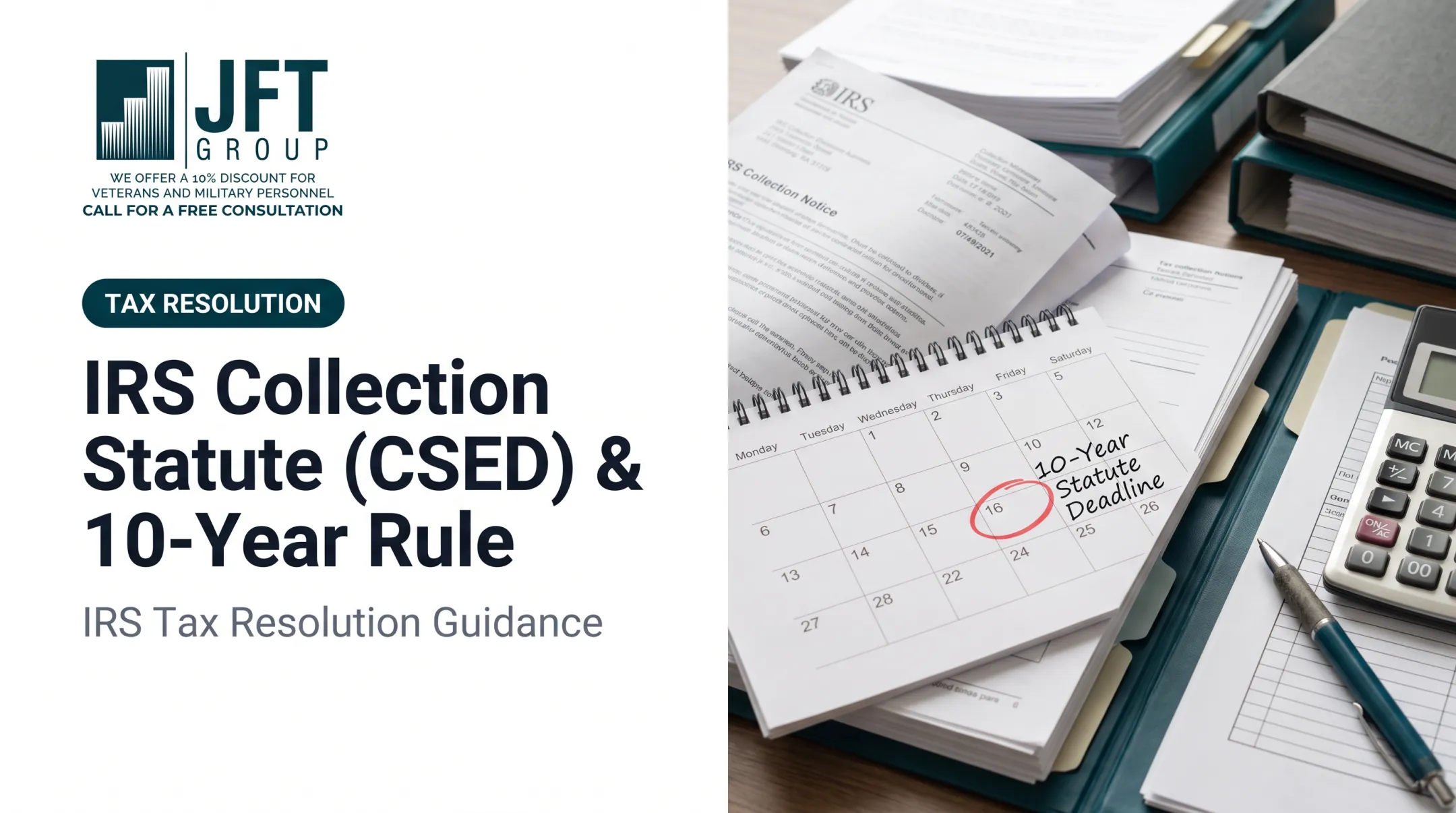
The IRS generally has 10 years from assessment to collect, called the Collection Statute Expiration Date. A pending Offer, installment request, CDP hearing, or bankruptcy can suspend that clock.
Waiting out the deadline isn't a plan. It invites escalating enforcement.
Common Mistakes, Troubleshooting, and Alternatives
Common negotiation mistakes
- Ignoring IRS notices until interest and penalties grow
- Submitting incomplete forms that get returned unprocessed
- Inventing or overstating expenses, or hiding assets
- Applying for a program you don't qualify for
- Believing "pennies on the dollar" promises from unvetted promoters
The IRS warns about Offer in Compromise mills. Verify any provider, read the engagement terms, and don't give sensitive information to callers until you confirm who they are.
If the IRS returns or rejects your request
A returned Offer is incomplete or can't be processed, usually without appeal rights. A rejected Offer was considered and denied. You have 30 days from the letter date to appeal, using Form 13711.

Respond with updated records and recalculated figures rather than resubmitting the same unsupported request. If an IRS delay is causing serious hardship, contact the Taxpayer Advocate Service.
Alternatives to direct negotiation
- Pay in full: ends interest (7% annually, compounded daily, for Q4 2026) and penalties
- Payment plan: fees apply and interest continues, though the late-payment penalty drops to 0.25% a month
- Return correction: fixes the liability, but doesn't solve inability to pay
- Hardship status: pauses collection, but the debt remains
- Bankruptcy: may discharge some old income taxes under timing tests, so consult a bankruptcy attorney
Conclusion
Effective IRS negotiation starts with verifying the debt, filing required returns, documenting your finances, and choosing a resolution that fits your real circumstances. The IRS responds to accurate records and a supportable proposal, not pressure.
Act before collection escalates. If your case involves a business, audit, levy, disputed liability, complex assets, or incomplete records, get qualified help.
Frequently Asked Questions
What is the best way to settle my IRS tax debt?
It depends on your ability to pay, assets, compliance, and whether the balance is correct. Payment plans, Offers in Compromise, penalty relief, and hardship status are the main routes, and none is guaranteed.
Can you negotiate directly with the IRS?
Often yes. Many taxpayers apply or communicate directly. Complex cases may benefit from an attorney, CPA, or enrolled agent authorized through Form 2848.
How do I get the IRS to erase late penalties?
Request first-time abatement if you have a clean three-year compliance history, or reasonable-cause relief with documentation. Form 843 applies in some cases. Verify current criteria, since the IRS is transitioning to automatic exemption.
Does the IRS ever forgive past owed taxes?
Eligible taxpayers may settle for less through an Offer in Compromise. The IRS doesn't automatically erase valid debt, and Currently Not Collectible (CNC) status only delays collection.
Why am I getting calls from tax resolution services?
Why a specific firm has your information is often unclear, though federal tax liens are public filings. Verify the caller, be wary of guaranteed results, protect personal data, and check credentials first.